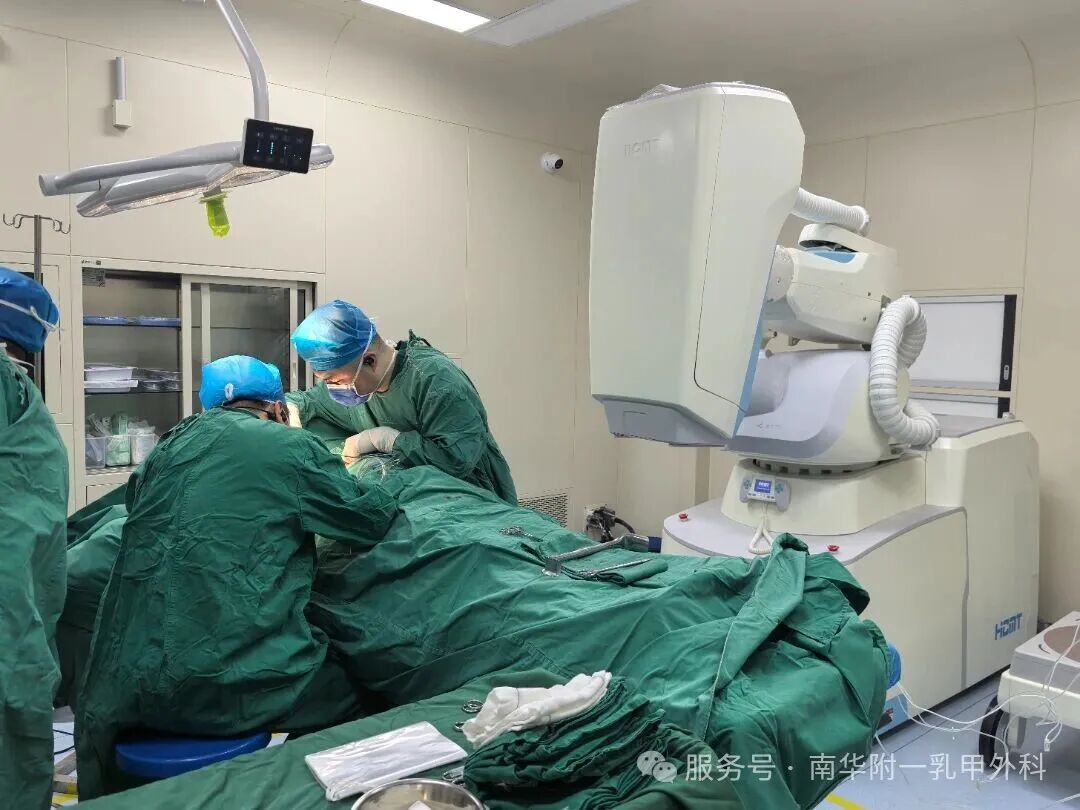
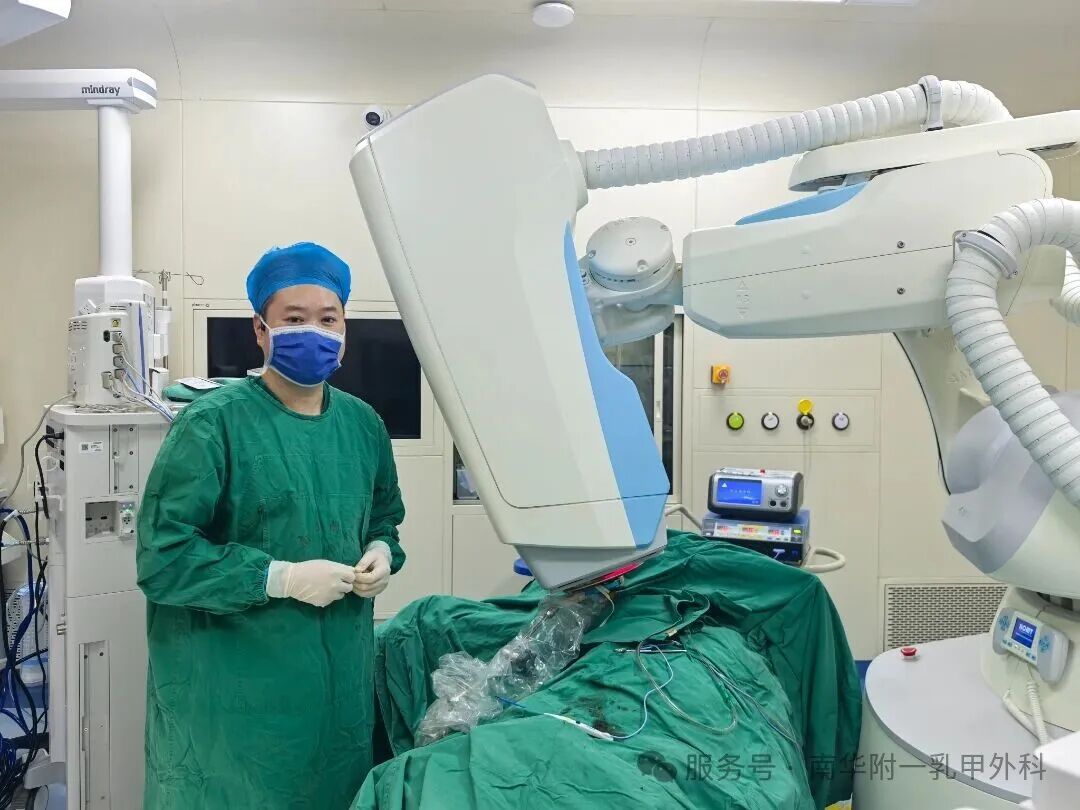
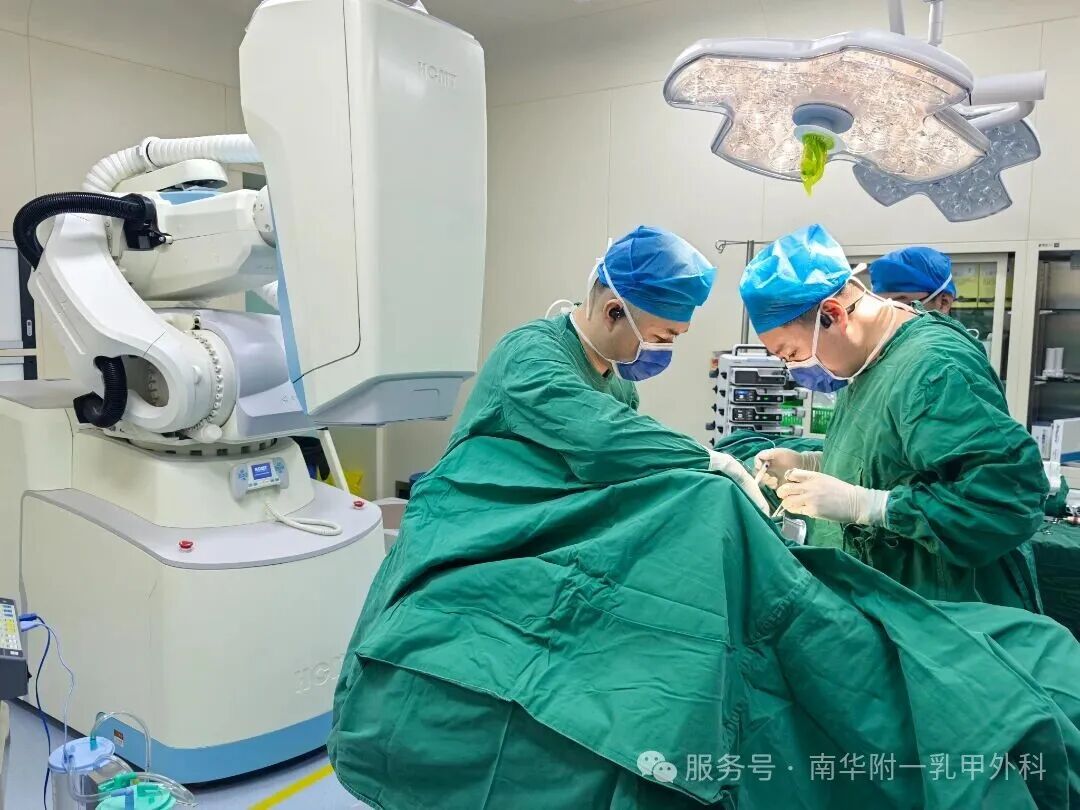
Recently, the team led by Director Hu Zecheng of the Department of Breast and Thyroid Surgery at The First Affiliated Hospital of University of South China, together with specialists from medical oncology, anesthesiology, the operating room and other disciplines, successfully performed Hunan’s first breast-conserving surgery for breast cancer combined with intraoperative electron radiotherapy (IOERT). This was not only the first use of this technique in Hunan, but also the world’s first successful breast cancer IORT procedure using an electron beam spherical applicator, marking a major advance in precise, integrated breast cancer treatment at the hospital.
Conventional external beam radiotherapy after breast-conserving surgery generally continues for 4–6 weeks. With this innovative technique, precise radiotherapy can begin immediately after tumor removal. A spherical applicator is positioned precisely to deliver a single high dose to the surgical area. This substantially shortens the treatment course, reduces the burden of repeated postoperative hospital visits and enables more precise control of local recurrence risk. It also greatly reduces radiation exposure to normal tissues such as the heart, lungs and skin, improving treatment safety. The approach reduces the patient’s overall burden in terms of time, financial pressure and psychological stress.
The new technique was delivered through multidisciplinary collaboration, allowing tumor removal and target-area irradiation to be completed in the same procedure and establishing an integrated model in which surgery and radiotherapy are performed together. The patient recovered well after surgery and did not require additional subsequent radiotherapy. This patient-centered approach also streamlined and improved the overall care pathway.
As an important innovation in local breast cancer treatment, IORT integrates surgery and radiotherapy in both time and space, moving from fractionated treatment toward a single-session definitive treatment. It puts the principles of precision treatment and integrated care into practice and provides an efficient, patient-centered option for appropriately selected patients. The hospital will continue to advance standardized clinical use and research of the technique, helping improve comprehensive breast cancer care in the region so that more patients can benefit from precise, efficient and integrated treatment.