Rednet News, August 28 (Correspondent: Long Hong) — Giant retroperitoneal liposarcoma is widely regarded as one of the most difficult challenges in abdominal surgery. These tumors lie deep in the abdomen and may encase or compress major blood vessels and vital organs, with any misstep risking irreversible organ damage. Recently, the gastrointestinal surgery team led by Ouyang Jun at The First Affiliated Hospital of University of South China completely removed a massive right retroperitoneal liposarcoma occupying two-thirds of the abdominal cavity. Under exceptionally demanding conditions, the team preserved the patient’s only functioning right kidney and worked with Manbo Cai’s radiotherapy team from the Department of Oncology to deliver intraoperative radiotherapy to the tumor bed, strengthening protection against recurrence.
The tumor was enormous and had displaced the abdominal organs forcefully to the left. The situation was even more critical because the patient’s left kidney had previously become completely atrophic due to stones, leaving the right kidney as the only functioning kidney. The giant tumor was densely adherent to the right renal capsule, with poorly defined boundaries of invasion. The surgical team faced a severe dilemma: removing the right kidney together with the tumor to maximize clearance would immediately leave the patient dependent on lifelong dialysis, while forceful dissection risked injuring the renal vessels or kidney tissue. Major bleeding or impaired renal blood supply could likewise result in the loss of the patient’s only functioning kidney. The conflict between preserving the kidney and achieving radical tumor removal left almost no margin for error.
To overcome this challenge, gastrointestinal surgery convened a multidisciplinary team with oncology, urology, vascular surgery, anesthesiology, nephrology and the operating room before surgery. The team repeatedly reviewed CT images, evaluated the boundaries between the tumor and the renal vessels, inferior vena cava and bowel, and established two plans: strive for complete tumor separation while preserving the right kidney, while also preparing emergency responses for major bleeding or renal injury and finalizing the intraoperative radiotherapy plan.
In the operating room, the tumor had displaced normal anatomy and made exposure difficult. The surgeons carefully separated the tumor little by little from the bowel and major retroperitoneal vessels. In the high-risk area where the tumor adhered to the right kidney, they meticulously distinguished the tumor pseudocapsule from renal tissue, avoided the renal blood vessels and combined blunt and sharp dissection. They sought to remove the tumor completely while preventing tears to the kidney tissue or injury to the renal pedicle. Through precise work, the team successfully removed the giant liposarcoma intact and preserved the patient’s only functioning right kidney.
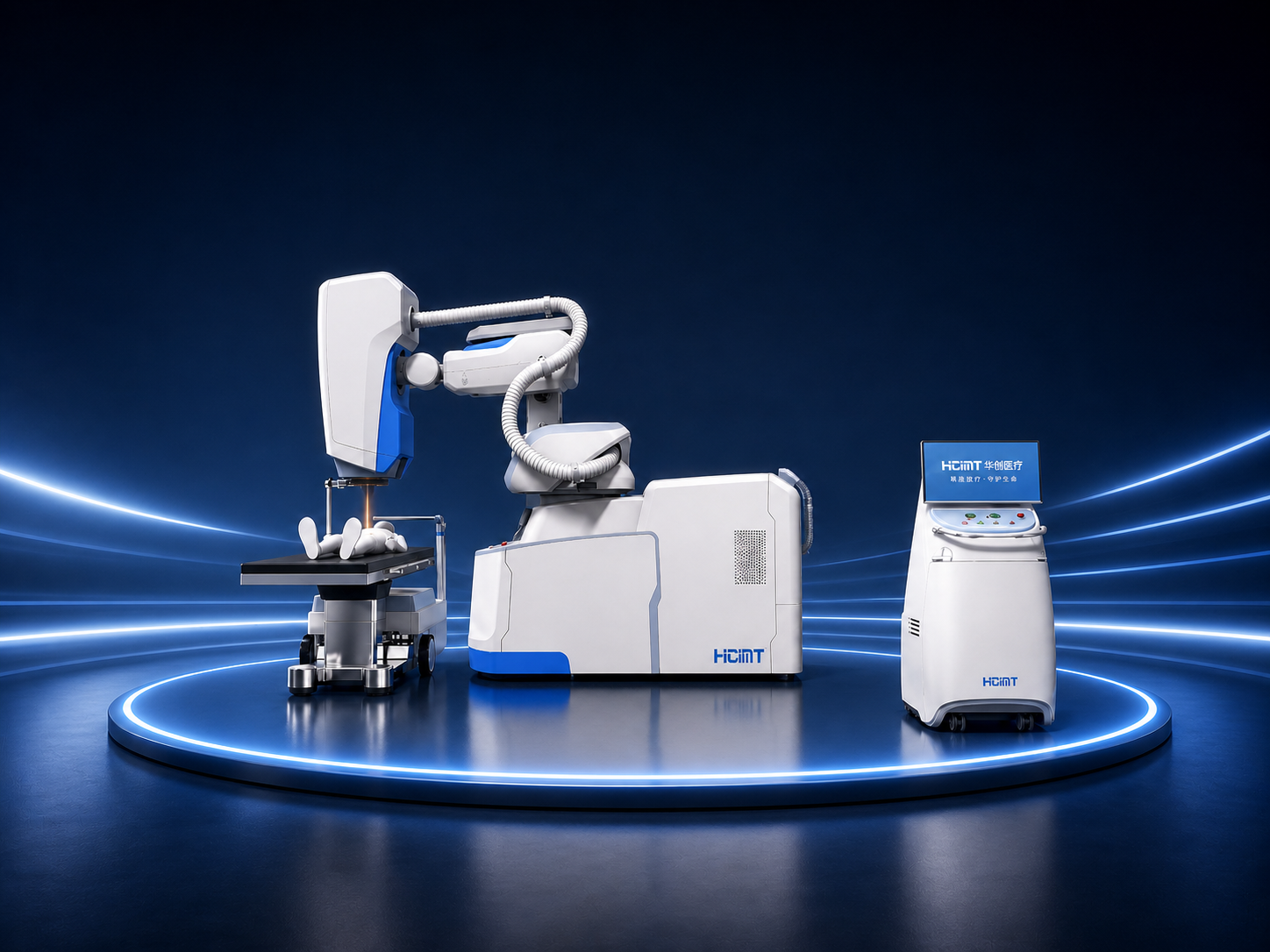
Immediately after the specimen was removed, Manbo Cai’s radiotherapy team delivered intraoperative electron radiotherapy to the tumor bed at high risk of recurrence and the region surrounding the right kidney where the tumor had been adherent. The open surgical field enabled precise targeting of areas at risk for residual tumor cells, reducing the risk of local recurrence and seamlessly integrating surgical resection with radiotherapy without a second operation or anesthetic.
Retroperitoneal liposarcoma usually produces few specific symptoms at an early stage. By the time patients seek care for abdominal distension or enlargement, the tumor is often already massive, prone to invading nearby organs and associated with a high rate of postoperative local recurrence. The difficulty of this case lay not only in removing the giant tumor but also in balancing radical cancer treatment with preservation of the patient’s only functioning kidney, placing exceptional demands on anatomical expertise and intraoperative judgment.
The successful operation demonstrates the hospital’s capability in managing complex retroperitoneal tumors. Through multidisciplinary collaboration, the team integrated surgery and IORT into a unified treatment approach, providing a stronger option for patients with complex retroperitoneal tumors in southern Hunan. The patient currently has stable vital signs and kidney function and is recovering well.