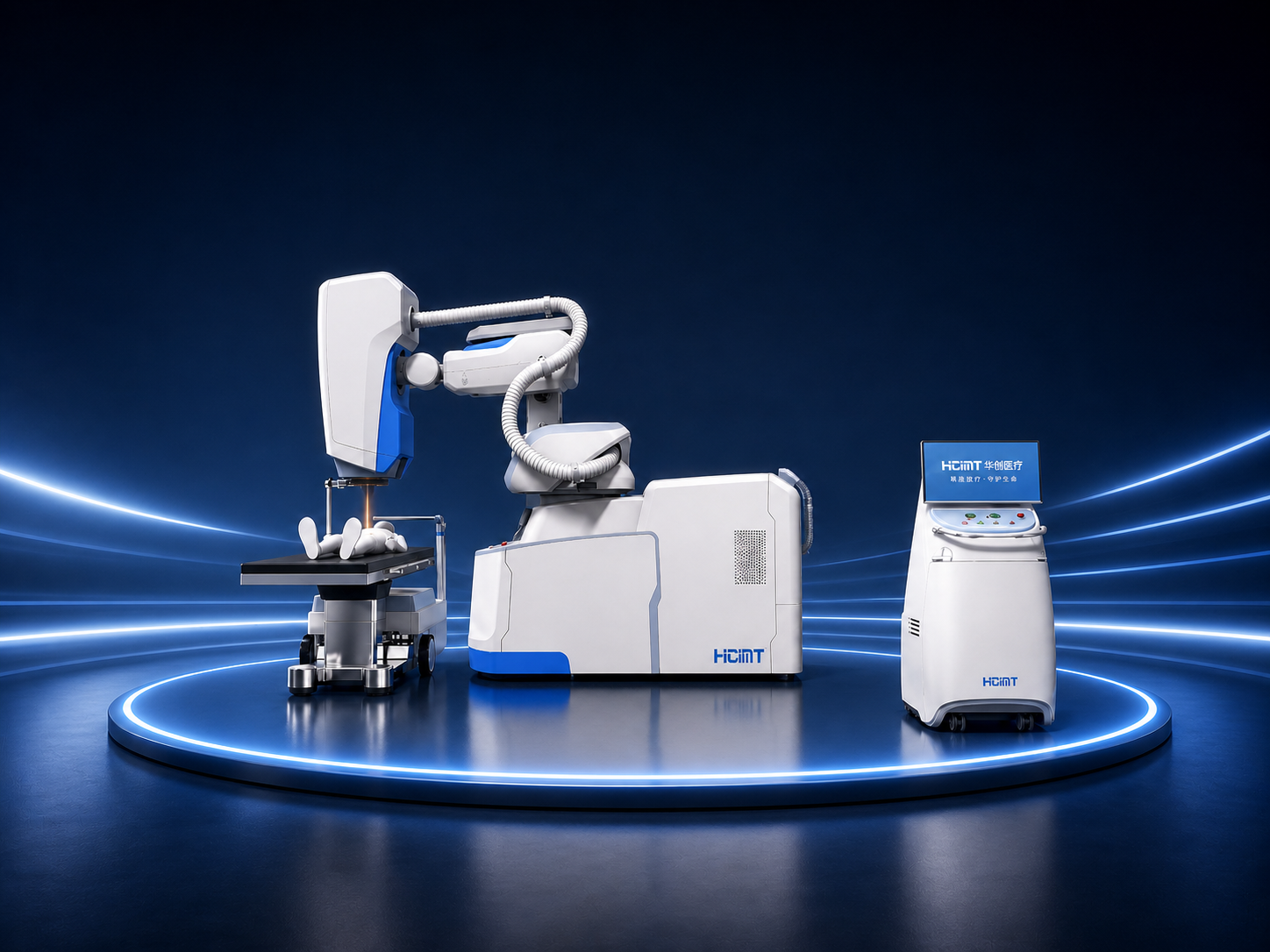
Hunan Daily · New Hunan, September 15 (Correspondent: Long Hong) — Recently, the gastrointestinal surgery team led by Ouyang Jun and the oncology team led by Manbo Cai at The First Affiliated Hospital of University of South China jointly performed resection of a recurrent tumor combined with intraoperative radiotherapy (IORT) for a patient whose right retroperitoneal liposarcoma had recurred after multimodal treatment. This was the fifth liposarcoma IORT case completed through collaboration between the two teams, adding to their clinical experience in the comprehensive treatment of complex retroperitoneal tumors.
The patient had previously undergone surgery for liposarcoma and systemic chemotherapy and sought care at the hospital after the tumor recurred. Because the recurrent tumor lay deep, was adjacent to major blood vessels, involved the psoas major muscle and had complex anatomical relationships, a repeat operation would be challenging. Ouyang Jun’s and Manbo Cai’s teams jointly assessed the case and devised a plan to complete tumor resection and precision IORT during the same operation.
During surgery, Ouyang Jun’s team carefully separated the tumor from surrounding tissues and completely resected the recurrent tumor and involved areas while protecting major vessels, nerves and adjacent organs. Immediately after resection, Manbo Cai’s team delivered IORT to the tumor bed at high risk, directing radiation to the local area most in need of additional control and seamlessly combining surgery with precision radiotherapy. For abdominal tumors, a major advantage of IORT over conventional external beam radiotherapy is that normal tissues and organs can be displaced outside the treatment field under direct surgical visualization. This helps spare them from irradiation while delivering an effective tumoricidal dose to the target and concentrating treatment on the area at high risk, thereby strengthening local treatment while minimizing exposure of surrounding normal tissues as far as possible.
The two teams have now jointly completed five liposarcoma IORT cases. Each case underwent rigorous preoperative assessment, multidisciplinary discussion and radiotherapy equipment quality assurance (QA) checks and was completed using a standardized workflow. The cases provide preliminary indications of good safety and feasibility and offer a new combined treatment option for patients with complex or recurrent retroperitoneal tumors.
Experts note that retroperitoneal liposarcomas are often deep and large, lie close to major blood vessels, nerves and organs, and carry a relatively high risk of local recurrence. For patients with recurrent disease in particular, repeat surgery alone may still leave local control inadequate. Combining surgical resection with precision IORT allows the high-risk tumor bed to be irradiated directly at close range after resection. Together with preoperative or postoperative radiotherapy, the approach aims to improve local tumor control and overall survival.
From their initial case to the fifth liposarcoma IORT procedure, Ouyang Jun’s and Manbo Cai’s teams at the hospital have continued refining the coordination between surgery and radiotherapy. The patient’s decision to seek care there and successful completion of treatment also reflect the hospital’s growing capabilities in surgery, radiotherapy and multidisciplinary management of complex retroperitoneal tumors.